Stain is maintenance, not a one-time finish
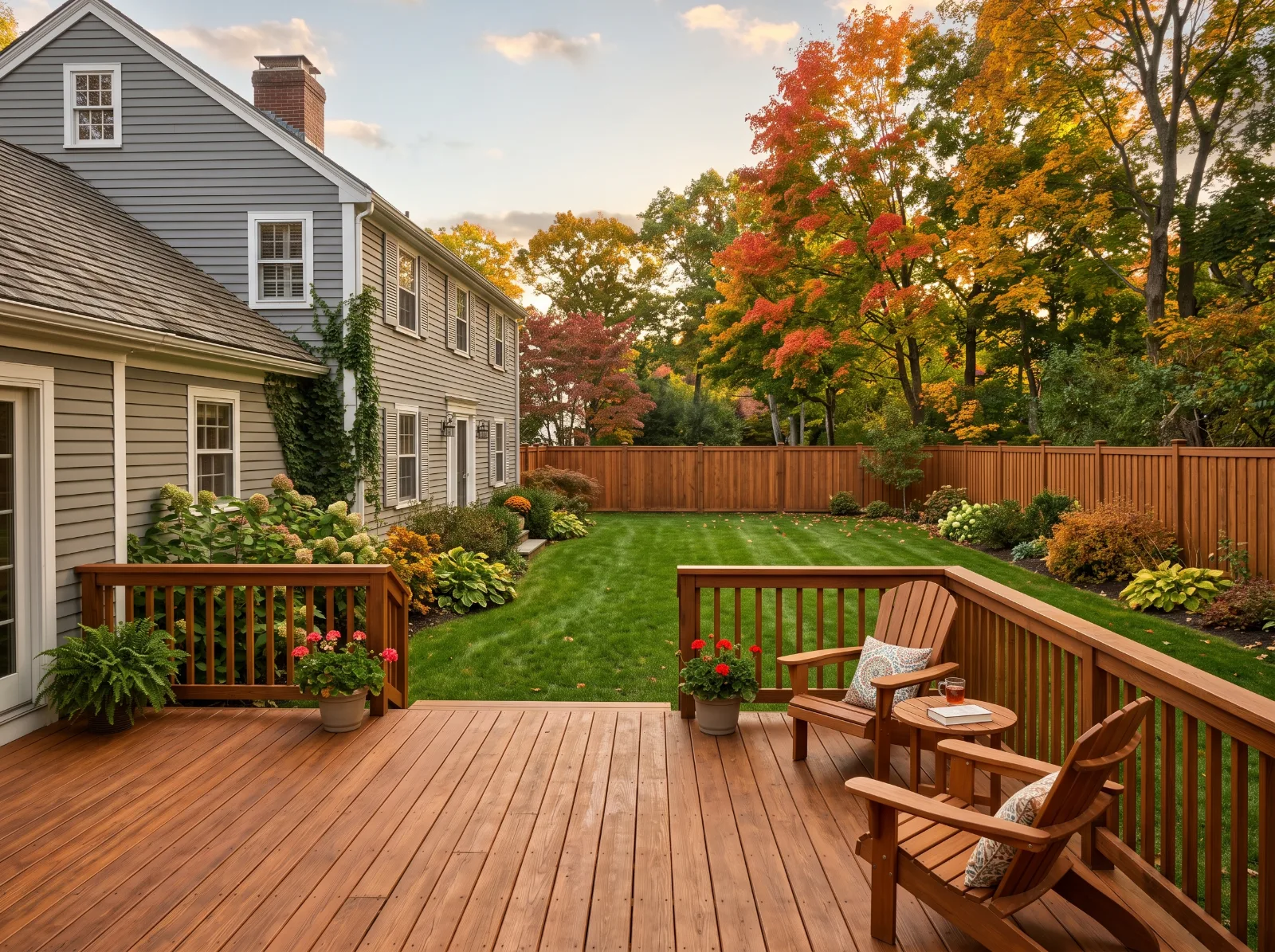
Paint on a house can go seven to ten years. Stain on a deck floor does not come close. A deck in Central Massachusetts takes direct sun all summer, holds snow for weeks, gets shoveled, gets salted near the door, and sits under wet leaves every fall. The walking surface wears first. Railings and fences, which shed water, last longer.
That is why deck and fence staining is really about three decisions: when the wood is ready, how it gets cleaned, and which product and opacity it gets. Get those right and a maintenance coat every few years keeps the wood sound. Get them wrong and you end up paying to strip peeling stain off the boards.
This page covers staining existing wood decks, new pressure-treated decks and wood fences. If you are building or replacing a deck, start with deck building or composite decking. For siding and trim, see exterior painting; for a front door in a gloss enamel, see trim, door and stair painting.
Who it is right for, and where stain will not help
Staining is right for pressure-treated pine, cedar and other wood decks, railings, stairs, pergolas and fences that are structurally sound.
It will not help when:
- Boards are soft, split or cupped badly. Stain does not fix rot. Replace damaged boards first, and check the framing under them.
- Railings are loose. Loose posts and balusters are a safety problem to fix before any finish goes on.
- The deck is composite or PVC. Those boards are not stained. Brands like Trex, TimberTech, AZEK and Fiberon are cleaned according to the manufacturer’s instructions instead.
What it costs in Central MA
Typical 2026 ranges, not quotes. The written estimate itemises cleaning, stripping, board replacement, the named stain and coat count, and anything excluded.
| Typical scope | Typical Central MA range |
|---|---|
| New pressure-treated deck about 12 x 16 ft, cleaned and one coat semi-transparent | $700–$1,300 |
| Existing deck, washed, brightened and re-coated | $3–$5 per sq ft |
| Failed film stain stripped, sanded and re-stained | $5–$9 per sq ft |
| Railings and balusters | $6–$14 per linear ft of railing |
| Wood fence, one side | $5–$12 per linear ft |
| Deck boards replaced before staining | Priced per board after inspection |
Stripping is what drives the price up. A deck that was coated with solid stain or deck paint and is now peeling takes far more labor than one that was kept up with a penetrating stain.
How the job runs, step by step
A typical scope looks like this:
- Inspect. Walk the deck, check for soft boards, loose railings and popped fasteners, and test how the wood absorbs water.
- Protect. Plants, siding and the house foundation get covered or wetted before any cleaner goes on.
- Clean or strip. Weathered wood gets a wood cleaner to lift gray fibers and mildew. Failed film stain gets a stripper. Pressure washing is done at low pressure with a fan tip; high pressure furs the wood and gouges soft pine.
- Brighten. A wood brightener after cleaning or stripping restores the wood’s color and helps stain soak in evenly.
- Dry and sand. The wood dries for a few days. Raised grain and fuzzed fibers get sanded.
- Stain. Applied by brush, pad or sprayer and back-brushed, following the manufacturer’s coverage. Many penetrating stains are one coat; over-applying leaves a sticky surface that wears badly.
- Cure. Stay off the deck for the time listed on the can, usually a day or two, and keep furniture off longer.
Timeline: most decks take two to four days from cleaning to final coat, mostly drying time. Fences depend on length and whether both sides are done.
Choosing the stain
Opacity is the main choice:
- Transparent and semi-transparent stains soak into the wood, show the grain and wear away instead of peeling. They are the safer choice for deck floors.
- Semi-solid and solid stains hide the grain and look closer to paint. They are best on railings, fences and vertical boards, and on older wood with mismatched repairs.
The products we use:
- Cabot Australian Timber Oil. An oil-based, penetrating stain for decks and outdoor wood that shows the grain, applied as one coat. Cabot also makes Wood Cleaner and Wood Brightener for prep.
- Cabot Semi-Transparent and Solid Color stains. For fences and railings, Cabot has oil and water-based options across every opacity, including Solid Color Acrylic Stain + Sealer.
- ProLuxe (formerly Sikkens) SRD. A one-coat, penetrating transparent wood finish for decks, railings and siding, tinted with high-transparency pigments so the grain shows through. ProLuxe also makes a dedicated deck finish, formerly sold as Cetol DEK.
Manufacturer warranties vary by product and require installation to the manufacturer’s instructions, so we follow the label on prep, temperature and coverage.
New England issues
- New pressure-treated lumber. Fresh lumber is often too wet to stain. Use the sprinkle test: water that beads means wait; water that soaks in means the wood is ready.
- Temperature and dew. Cabot lists 50 to 90°F for air and surface temperature on Australian Timber Oil. Late-day stain in September can be ruined by overnight dew before it soaks in.
- Snow, shovels and ice melt. Metal shovels scrape stain off the boards, and ice melt near the back door wears the finish. Use a plastic shovel and a product the decking manufacturer allows.
- Shade and mildew. North-facing decks and fences under trees in Bolton, Harvard and Westford lots grow mildew fast. They need regular cleaning more than extra stain.
- Older painted porches. Scraping painted porch floors or railings on a pre-1978 house in Lancaster or Concord can disturb lead paint, and that work falls under EPA RRP and Massachusetts lead-safe rules. Ask any contractor for their Massachusetts lead-safe renovation credentials in writing before work that disturbs paint in a pre-1978 home.
What to ask any contractor
- Which stain, by name and opacity, and how many coats?
- Will you clean, brighten, or strip, and why?
- What pressure and tip will you use on the wood?
- How will you protect plants, siding and the foundation?
- How soon can we use the deck, and when should it be recoated?
For a firm number, book a free in-home consultation. We inspect the boards and railings, test how the wood takes water, show stain samples on your own wood, and send a written estimate that spells out prep, product and coats.
Common questions
How long should I wait to stain a new pressure-treated deck?
Until the wood is dry enough to absorb water, not a fixed number of months. Sprinkle water on the boards: if it beads, wait and test again in a few days; if it soaks in, the wood is ready. YellaWood's current guidance is to stain within about six weeks of construction once the wood passes that test.
Semi-transparent or solid stain for a deck floor?
For walking surfaces, we lean toward transparent or semi-transparent penetrating stains. They soak in and wear away gradually. Solid stains form a film, and on a horizontal deck floor that film tends to peel under foot traffic, snow and standing water. Solid stain works well on railings, fences and vertical boards.
How often does a deck need restaining in Massachusetts?
Horizontal deck boards typically need a maintenance coat every two to three years here; railings and fences last longer because they shed water. Sun, shade and snow load make a big difference, so a south-facing deck usually needs attention sooner than a shaded one.
Do composite or PVC decks need stain?
No. Composite and PVC decking from brands like Trex, TimberTech, AZEK and Fiberon is not stained. It needs washing, and the manufacturer's care instructions should be followed. Only wood parts such as a pressure-treated frame, cedar railings or wood stairs take stain.
Can you stain in the fall?
Often into early autumn, if the forecast holds. Stains like Cabot Australian Timber Oil call for air and surface temperatures between 50 and 90°F. Cold nights and heavy morning dew are what end the season in Central Massachusetts, not the calendar.