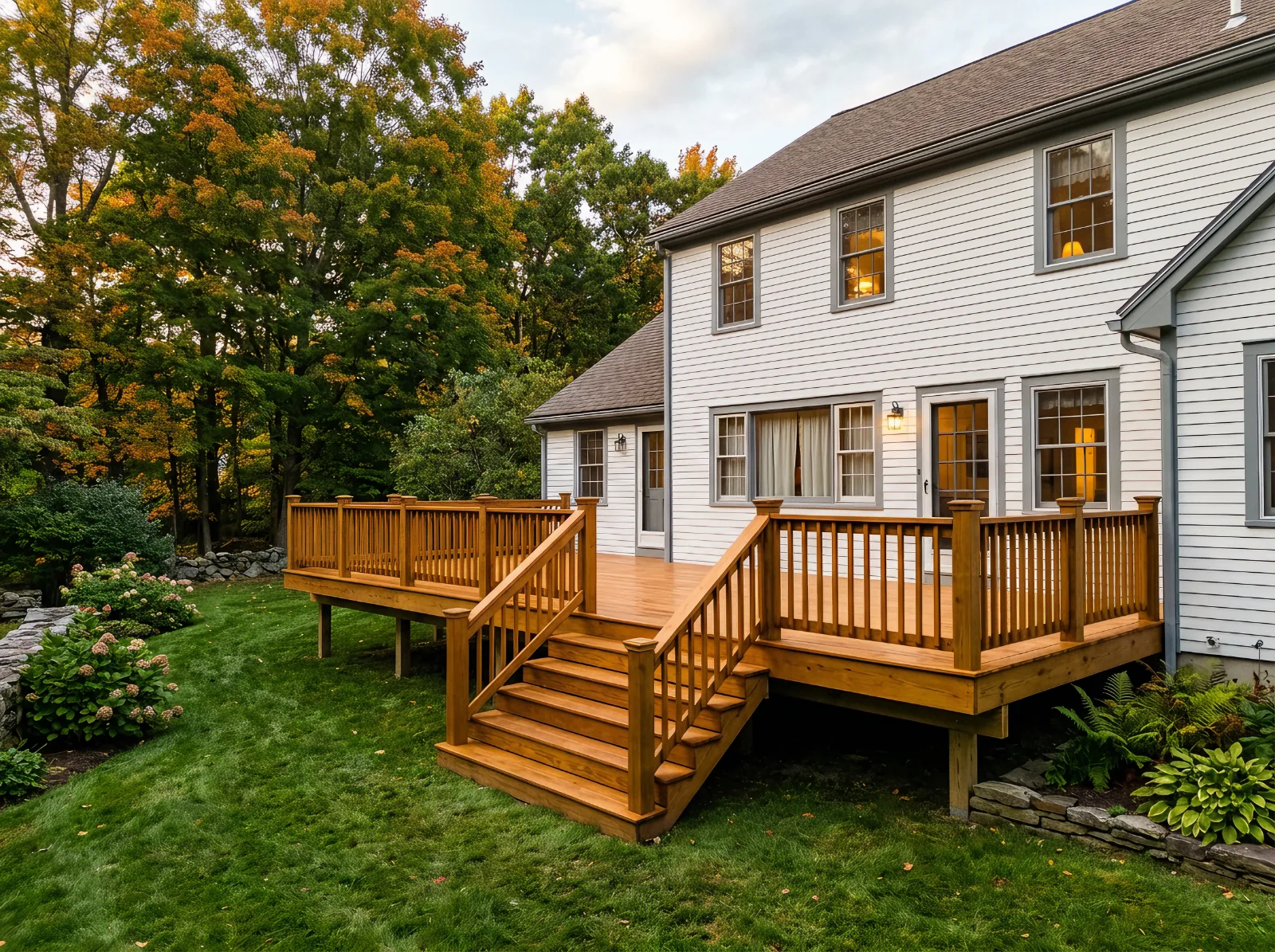
Who a pressure-treated deck is right for
Pressure-treated (PT) southern yellow pine is the real-wood deck most Central Massachusetts homeowners can afford to build big. It is strong, it takes stain, and it is easy to repair one board at a time. If you want the most square footage for the money, if you like the look of stained wood, or if you plan to sell within about ten years, PT is usually the right call.
It is not the right call if you know you will never get out there with a brush. PT needs a wash and a coat of stain every two to three years, and a deck that misses that cycle turns grey, checks, and starts to splinter. If low upkeep matters more than first cost, read our composite deck page or look at PVC decking. For a side-by-side of all materials, see the 2026 deck cost guide. This page goes deeper on one thing: building a PT deck that holds up.
What a pressure-treated deck costs in Central MA
National cost guides put wood decks well below Massachusetts numbers, because labor, permits and 48-inch frost footings cost more here. In Central MA a typical PT deck runs about $34 to $55 per square foot installed, including the frame, footings, a standard wood railing, one stair run and the permit.
These are typical ranges, not quotes:
| Typical scope | Size | Typical installed range |
|---|---|---|
| Low platform, one step, no guard needed | 12x12 (144 sq ft) | $6,000–$9,500 |
| Attached deck ~3 ft off grade, wood railing, one stair | 16x20 (320 sq ft) | $10,000–$18,000 |
| Same, larger footprint | 20x20 (400 sq ft) | $13,500–$22,000 |
| Tear off an old deck first | per deck | add $1,200–$1,800 |
| First clean and stain coat once the wood is dry | ~400 sq ft | $700–$1,400 |
Small decks cost more per square foot because the permit, footings and stairs don’t shrink with the deck. Our written estimate itemises the scope, the lumber grade and rating, the fasteners and hardware, and what’s excluded, so you can compare it line by line.
The lumber details that decide how long it lasts
“Pressure-treated” covers a range of products. The tag stapled to the end of each board tells you what you are getting, and it is worth reading.
- Ground-contact vs above-ground. Treated wood is rated by use category. Above-ground lumber (UC3B) is fine for decking and rails that dry out between rains. Posts need ground-contact treatment (UC4A or higher). The industry standard for treated wood also calls for ground-contact joists and beams when they would be hard to repair or replace and are critical to the structure. On a low deck with little airflow underneath, we spec ground-contact for the whole frame.
- Grade. Number 1 or select boards have fewer knots and less wane than number 2. For the decking and rail caps, the surfaces you touch, the upgrade is worth it.
- Wet vs kiln-dried after treatment (KDAT). Standard PT comes out of the treatment cylinder wet, so it shrinks, cups and twists as it dries. KDAT is dried before it ships, stays straighter and can be stained sooner. It costs more and is not always stocked, so we price it when you ask.
- Cut ends. Treatment doesn’t always reach the core of a thick post. Every cut end gets a brush-on end-cut preservative before it goes in.
Fasteners, hangers and joist tape
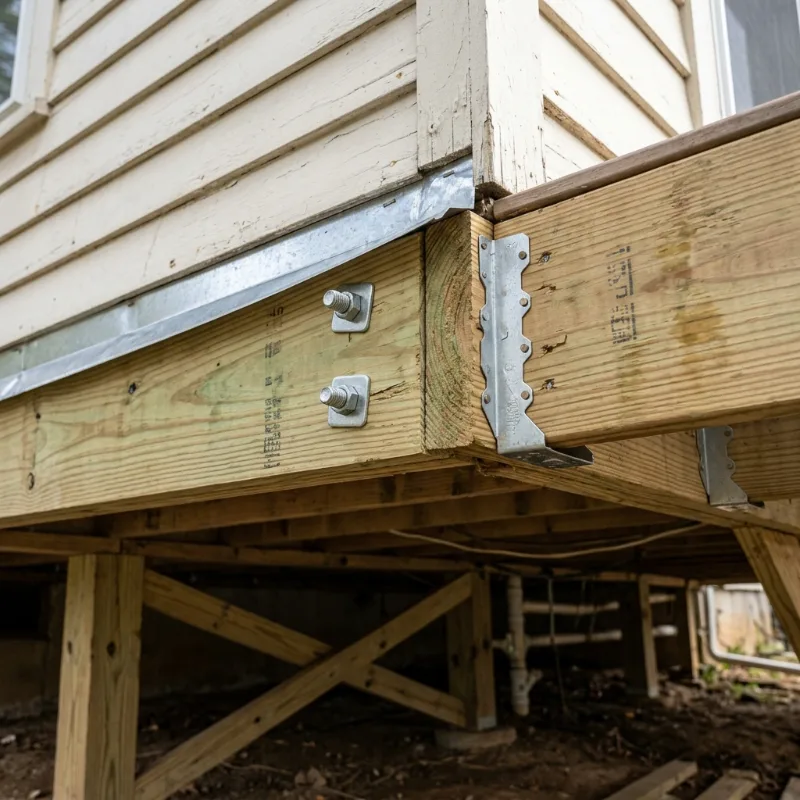
Modern copper-based treatments are harder on steel than the old formulas. Screws, hangers and bolts need to be hot-dip galvanized or stainless and rated for treated lumber, and they should match: galvanized screws in a stainless hanger invite corrosion. Near salt spray or a pool, we move to stainless.
On top of the joists we apply butyl joist tape. It keeps water from sitting in the screw holes and in the checks that open along the top of every joist, which is where frames rot first.
For the boards themselves, face screws (two per joist, ends pre-drilled) are standard on PT. Hidden clip systems exist for wood, but wet PT shrinks enough that clips can loosen, so we use them only with dry lumber.
What the job involves, step by step
- Layout and permit. We measure, sketch the frame, and file with your town’s building department. Most attached decks need a permit under the Massachusetts State Building Code (780 CMR).
- Footings. Holes go below frost depth, commonly 48 inches in Central Massachusetts. Your local building department sets the number. Footings are inspected before concrete or framing.
- Ledger or freestanding. On an attached deck the ledger is flashed and through-bolted to the house framing. Where the house framing can’t take it, the deck gets its own beam and posts at the house side.
- Frame. Posts, beams, joists, hangers and lateral hardware, then joist tape. A framing inspection comes next in most towns.
- Decking, railing, stairs. Boards are laid with the bark side up, screws in straight lines, and gaps set for how wet the lumber is.
- Final inspection and cleanup. Scraps and old deck debris leave with us.
On-site work for a typical 300 to 400 square foot deck is about 5 to 10 working days once the permit is in hand. Stain comes later, after the wood dries.
New England issues for wood decks
Freeze and thaw. Water that gets into a board’s end grain or a screw hole expands when it freezes. Sealing cut ends and keeping a stain coat on the boards is what stops the checking you see on neglected decks.
Shade and pine needles. Lots in Lancaster, Bolton and Groton often back up to woods. A deck that never sees sun stays damp, grows mildew and rots at the board seams. More gap between boards, cleared debris and a lighter, breathable stain help. So does keeping plantings off the frame.
Older homes. Plenty of the 1950s and 60s ranches in Leominster and Fitchburg, and the older colonials around Clinton, have rim joists or sills that are undersized or soft. We open up the siding where the ledger will go and check what’s behind it before we commit to attaching.
Staining in our climate. Stain on a day with no rain in the forecast and temperatures the product allows, not in late fall. Semi-transparent stain shows the grain and wears evenly; solid stain hides more but can peel. Our exterior painting page covers staining in more detail.
How to choose
- Want wood, have a budget, and don’t mind a maintenance cycle: PT.
- Want wood with less upkeep and more natural rot resistance: ask us about cedar, priced separately.
- Want no staining at all: composite or PVC boards on the same PT frame.
What to ask any deck contractor
- What use category and grade is the lumber, and is any of it ground-contact?
- What are the fasteners and hangers rated for, and do they match?
- How is the ledger attached and flashed, and what is behind the siding?
- How deep are the footings, and who files the permit and books inspections?
- When should we stain, and is the first coat included?
Next step
If you’re weighing a pressure-treated deck, we’ll come out for a free consultation: walk the yard, measure, bring board and stain samples, and follow up with a written estimate that itemises the scope, the lumber and what’s excluded.
Common questions
How long should new pressure-treated lumber dry before we stain it?
Until it drinks water instead of beading it. Sprinkle some water on a few boards: if it soaks in within a few minutes, the wood is ready. Wet-treated lumber can take a few weeks to a few months depending on sun and season. Kiln-dried-after-treatment lumber can usually be finished much sooner.
Is pressure-treated lumber strong enough for a deck frame under composite or PVC boards?
Yes. Almost every deck in Central Massachusetts, whatever the walking surface, sits on a pressure-treated frame. What changes is the joist spacing and the lumber rating the decking manufacturer and the town expect, which we build to.
Should the frame be ground-contact rated even if it isn't touching the soil?
For posts, anything near grade, and joists or beams that would be hard to get at and replace, we use ground-contact lumber. The industry standard for treated wood calls for it in those spots, and on low decks it is cheap protection.
Why are my new deck boards shrinking and leaving gaps?
Standard treated lumber arrives wet from the treatment process. As it dries over its first season, boards shrink in width. That is why wet boards go down tight or nearly tight, and why a dry winter can open gaps that partly close again in a humid summer.
How long does a pressure-treated deck last in New England?
With a flashed ledger, footings below frost depth and regular cleaning and staining, the boards commonly last 15 to 25 years and the frame longer. Skipped maintenance, poor drainage and shade that keeps the wood wet shorten that.