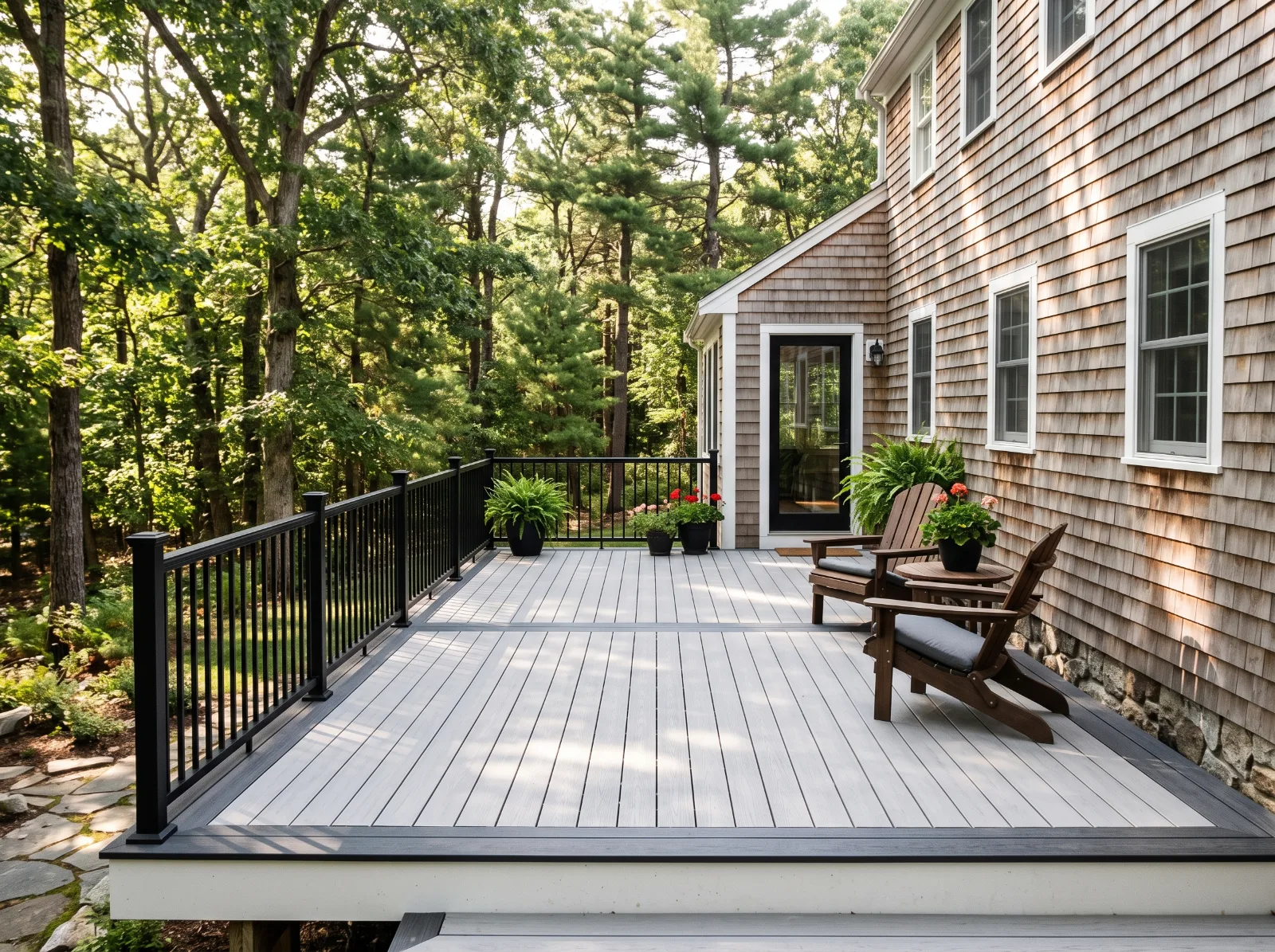
Who a PVC deck is right for
PVC decking is the premium end of low-maintenance boards. Where composite blends wood fiber and plastic under a cap, PVC has no wood in it at all. We install AZEK, TimberTech, Trex and Fiberon decking, and can source other major brands on request. This page is about the all-PVC option, mainly TimberTech Advanced PVC Decking by AZEK.
A bit of brand background, since it confuses people: AZEK and TimberTech were both made by The AZEK Company, which James Hardie acquired in 2025. The PVC boards carry both names. TimberTech’s composite lines (like PRO and EDGE) are a different product with a wood-fiber core.
PVC makes the most sense when:
- The deck lives in shade or near the ground. No wood fiber means nothing for mold to feed on inside the board.
- There’s a pool or hot tub nearby. Wet feet, splashing and chlorinated water are all easy on PVC.
- You’re staying in the house a long time and want the walking surface to be the last thing you think about.
It’s less compelling when budget is tight or the deck is a sunny, dry platform where a good capped composite performs nearly as well for less. For that comparison, start with our composite deck page. If you’re open to staining every few years, a pressure-treated deck costs far less.
PVC vs composite, point by point
| Capped composite | PVC (e.g. AZEK) | |
|---|---|---|
| Core | Wood fiber and plastic | Polymers, no wood fiber |
| Installed cost | Lower | Higher, often $2,500–$6,000 more on a 16x20 |
| Weight | Heavier | Lighter, easier to handle on stairs and upper decks |
| Moisture and mildew | Good, cap protects the surface | Better, nothing organic to feed mold |
| Heat in sun | Dark colors get hot | Also gets hot; color matters more than material |
| Movement with temperature | Less | More, so end gaps and layout matter |
| Scratches and scuffs | Cap scuffs under dragged furniture | Same; neither is immune |
Test samples before you pick. Drag a key across them, set them in the sun on your own deck at midday, and see which surface and color you like.
What a PVC deck costs in Central MA
National guides put AZEK and other PVC decking at roughly $58 to $95 per square foot installed. With Massachusetts labor, frost footings and permits, a typical Central MA range is about $70 to $115 per square foot installed, including the pressure-treated frame, hidden fasteners, railing, one stair run and the permit.
These are typical ranges, not quotes:
| Typical scope | Size | Typical installed range |
|---|---|---|
| New attached PVC deck, aluminum or composite rail, one stair | 16x20 (320 sq ft) | $22,000–$37,000 |
| Same, larger footprint | 20x20 (400 sq ft) | $28,000–$46,000 |
| New PVC boards and railing on a sound existing frame | 16x20 | $13,500–$19,500 |
| Picture-frame border in a contrasting color | per deck | add $800–$2,500 |
Collection matters. Within TimberTech’s PVC range, Harvest is the value tier, and Landmark and Vintage cost more for deeper color variation and board-width options. Our written estimate names the exact collection, color, fasteners and railing, and lists what’s excluded.
What the job involves, step by step
- Site visit and samples. We check sun, shade, drainage and how high the deck sits.
- Permit and footings. Footings go below frost depth, commonly 48 inches in Central Massachusetts. Confirm with your local building department.
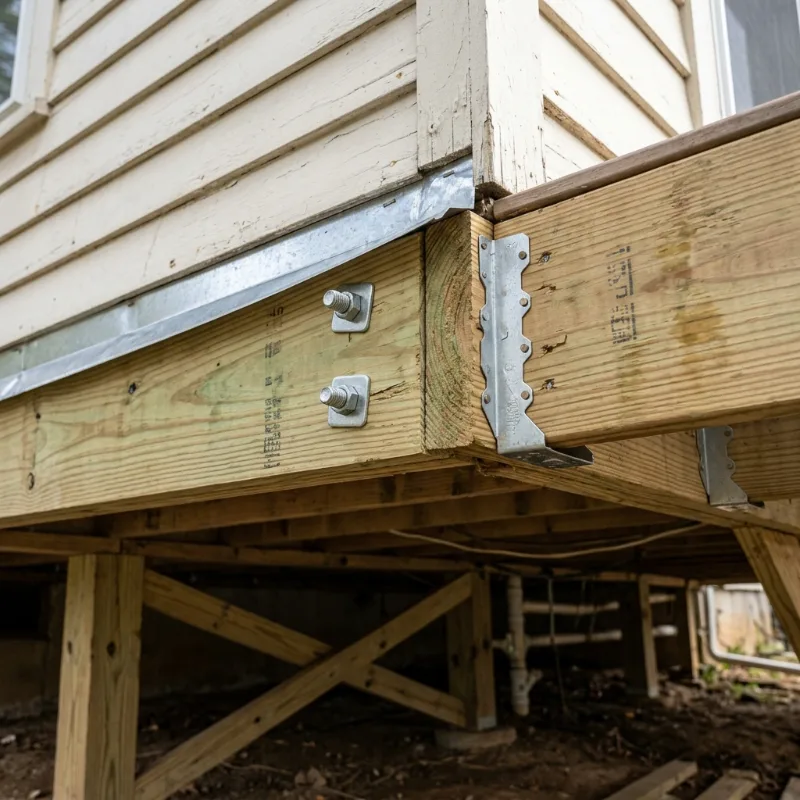
- Frame to the board’s spec. Joist spacing follows the manufacturer’s span table for the board, the layout and any diagonal runs or stairs, which usually means tighter spacing than an old wood deck. Joist tape goes on top.
- Layout for movement. PVC grows and shrinks along its length more than composite. We set end gaps for the temperature on install day, per the instructions, and plan butt joints or a border so boards don’t all end at one seam.
- Boards and fascia. Grooved boards go down with hidden clips; square-edge boards at borders and stairs get color-matched plugs or screws.
- Railing, stairs, final inspection. Then cleanup.
A typical deck is about one to two weeks on site after the permit, depending on size and stairs.
New England issues for PVC
Cold-weather installs. Boards installed on a cold November day will grow in July. That is fine if the gaps were set for the cold; it’s a problem if they weren’t. This is the most common PVC install mistake, and it is why we follow the temperature gapping chart.
Shaded, wooded lots. In Harvard, Bolton and Acton, a lot of back decks sit under oaks and pines and stay damp most of the season. Composite decks in those spots often grow surface mildew in the grooves; PVC gives mold less to work with, though it still needs a wash each spring.
Snow and ice. Shovel with a plastic blade, not metal. Check the manufacturer’s care guide before using any ice melt.
Older homes. On the older colonials in Concord and Acton, the ledger location often means removing clapboards painted before 1978. Disturbing that paint falls under EPA lead-safe rules. Ask any contractor for their lead-safe certification in writing before that work starts.
How to choose
- Budget first, sunny lot: capped composite.
- Shade, moisture, pool, or you want the lightest board to carry up to a second-story deck: PVC.
- Color: go lighter on south and west exposures.
- Width: mixing board widths looks good on a larger deck and costs more in layout time.
What to ask any deck contractor about PVC
- Which exact collection and color is in the price?
- How will you set end gaps for the install-day temperature?
- What joist spacing does this board need, and does my existing frame meet it?
- Are the fasteners the manufacturer’s system?
- What are the manufacturer’s installation requirements tied to its warranty?
Next step
If PVC is on your list, we’ll come out for a free consultation: check sun and shade, measure, bring AZEK and composite samples side by side, and follow up with a written estimate that itemises the scope, the exact products and what’s excluded.
Common questions
What is the difference between PVC and composite decking?
Composite boards have a core of wood fiber and plastic under a protective cap. PVC boards, like TimberTech Advanced PVC by AZEK, are made entirely of polymers with no wood fiber. That makes PVC lighter and better at shrugging off moisture and mildew, but it costs more and moves more with temperature.
Are AZEK and TimberTech the same company?
Yes. Both brands were made by The AZEK Company, which became part of James Hardie in mid-2025. The PVC decking is sold as TimberTech Advanced PVC Decking by AZEK, and the composite lines are sold under the TimberTech name.
Does PVC decking get hot in the sun?
All synthetic decking gets hot in direct sun, and color matters more than material: dark boards get hotter than light ones. TimberTech says its AZEK boards stay cooler to the touch than comparable competitor boards, but on a south-facing deck we still steer people toward lighter colors.
Can PVC boards go on my existing deck frame?
Sometimes. The frame has to be sound, the ledger flashed and bolted, and the joist spacing has to match the manufacturer's span requirements for the board and layout. Older frames at wider spacing often need joists added before new boards go down.
How long does a PVC deck last?
The boards don't rot, so the frame and footings usually decide the lifespan. Manufacturer warranties vary by product and require installation to the manufacturer's instructions, so we give you the exact product terms in writing with the estimate.