Bathroom remodeling in Rutland, MA
Bathroom remodeling in Rutland is mostly the primary bath in the 1990s stock reaching the end of its first life: a corner soaking tub nobody fills, a cramped fibreglass shower, and a laminate top carrying two undersized basins. In the farmhouses and the mid-century houses the job is more often about adding a bath than replacing one. Well pressure and septic capacity sit behind either version.
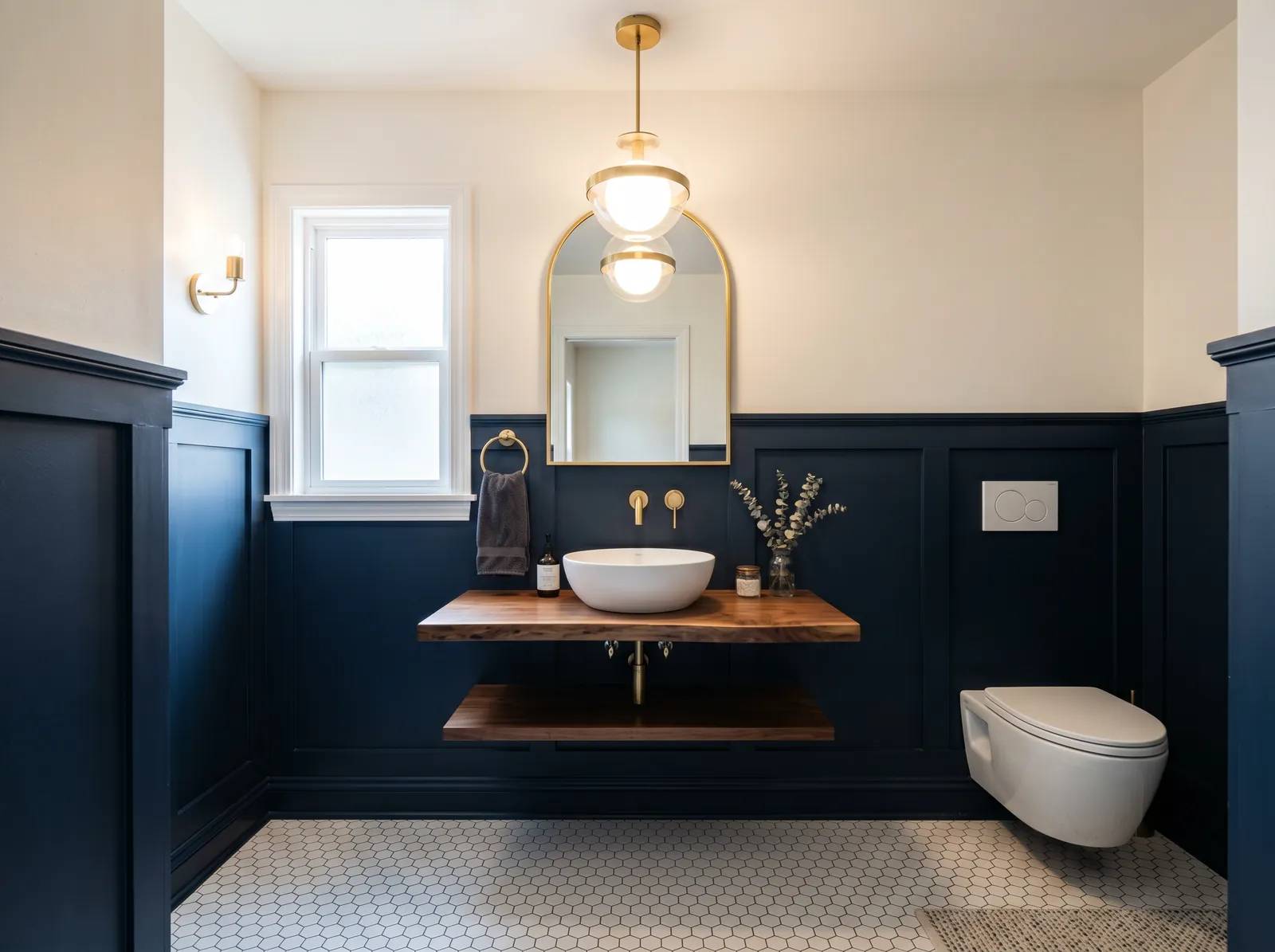
The houses this is written for
The stock here is antique farmhouses, a body of mid-century housing near the centre, and substantial newer colonial development on large lots.
What the 1990s primary bath got wrong
The layout of that era gave the biggest piece of floor to a corner tub with a deck around it, then squeezed the shower into whatever was left. The shower ends up narrow, the tub gets used once a year, and the vanity is a shallow cabinet with a moulded laminate top that has swollen at the seam behind the faucets. The tile, where there is any, is set on paper-faced board that gave up quietly some time ago.
The honest fix is usually to give the corner back to the shower. A proper walk-in with a bench, a fixed glass panel and a decent valve turns the room around, and it can often be done without shifting the waste line more than a foot or so. If a tub still matters to the household, a freestanding one in a smaller footprint beats a deck tub for both cleaning and cost.
Adding a bath in the older Rutland houses
The antique houses generally have one full bath upstairs, carved out of a bedroom corner when indoor plumbing arrived, sharing a wall with a chimney or a stair. The mid-century houses near the centre tend to run a full bath and a half, with the half tucked beside the back door. Either way, the ask is a second full bath, and where it can go is decided by the drain line long before it is decided by the floor plan.
A new full bath needs a waste run with fall, a vent that reaches open air, and a supply route that does not freeze. In practice that means finding a path down to the main stack that does not involve cutting the middle out of a floor joist. Sometimes the answer is a chase in a closet corner, sometimes it is stacking the new room above or below an existing one. We work that path out on paper first, then confirm it by opening one small area.
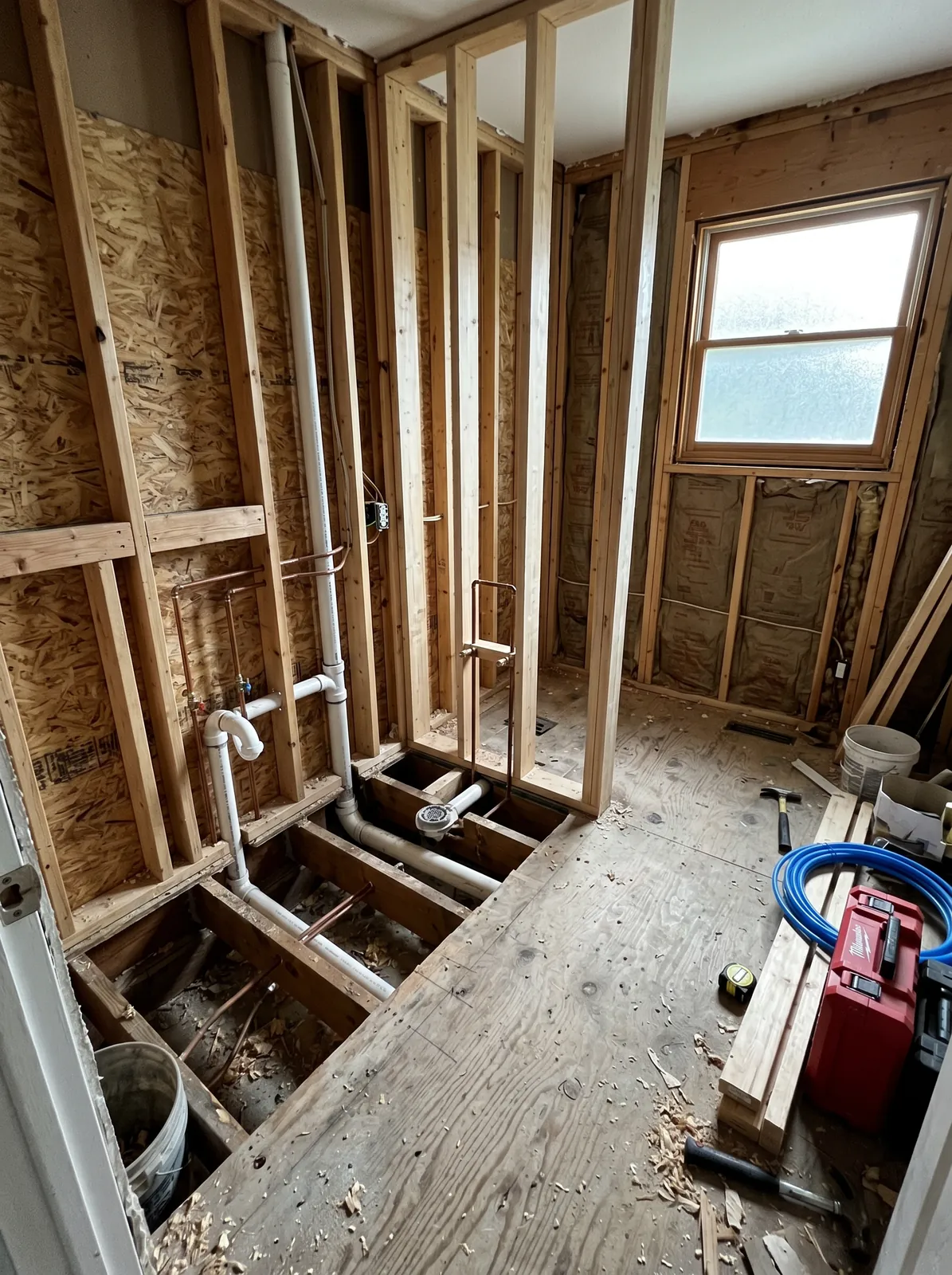
Septic, bedroom count and the well
On a Title 5 system the design flow is worked out from the number of bedrooms, not the number of bathrooms, so adding a bath by itself does not usually change what the system is rated for. That is not the same as saying it changes nothing. More fixtures means more water going out, and an older tank and field in this town may already be working near its limit. We want the system found, its age known and its condition assessed before a layout is signed off.
The well is the other half of the conversation. Two people showering at once on a tired pressure tank is an unhappy experience, so we check static and running pressure at the existing fixtures and look at what the tank is doing. Iron and hardness show up fast in a bathroom, staining a white basin and etching glass panels, so where treatment is absent we raise it while the walls are still open and pipe changes are cheap.
Behind the tile, and getting the fan outside
Tile is a finish, not a water barrier. Behind ours goes a proper backer with a sealed membrane over it, corners and the curb detailed before any tile is set, and the valve and drain tested before anything is covered. A shower pan is either a pre-formed unit set correctly or a mud bed sloped by hand to a drain that is actually in the right place. Getting that stage right is the difference between a bath that lasts and one we are opening again.
The fan is ducted outside through an exterior wall, insulated the whole way where it passes through cold space, so condensation runs out rather than back into the ceiling. In the older houses we also plan for what we might meet in demolition. Finishes and sealants from that period can contain materials that need testing before anything is torn out, and we test rather than guess. That step is set up at scoping so it never holds the job up.
Aging in place, sequence and living with one bathroom
A good many Rutland households plan to stay put on land they are not giving up, which makes this a natural moment for a curbless entry, blocking in the walls for grab bars, a comfort-height toilet and a wider door. Blocking costs almost nothing while the studs are exposed and is expensive to retrofit later. We put it in whether or not anybody needs it yet, because a bathroom built this way still looks like a normal bathroom.
The order of work is demolition, framing changes, plumbing and electrical rough, inspection, then waterproofing, tile, fixtures and paint. Where the house has only one bath we phase the work so the family is down to a working toilet and a basin for as short a stretch as we can manage, and we say up front how long that stretch is. Material is staged on site ahead of time because the drive back down the hill for a missing part costs half a morning.
Questions we get asked about Rutland
Do you work in Rutland?
Yes. Rutland is 15 miles from our base in Lancaster, well inside the area we cover day to day.
Does adding a bathroom mean upgrading our septic system?
Not on its own, in most cases. A Title 5 design is driven by bedroom count rather than fixture count, so an extra bathroom in the same house does not automatically change the rating. What matters is the real condition and age of your tank and field. We want it located and assessed early, and if you are also adding a bedroom the picture changes and needs proper advice.
Can we replace the corner tub with a bigger shower?
That is the most common change we make in the 1990s primary baths here. The corner tub takes floor that a walk-in shower uses far better, and the drain is often close enough that the waste move is modest. We check the joist direction below before committing, since a linear drain or a curbless entry needs a little depth to work with.
Will a second bathroom hurt our well pressure?
It can, if the pressure tank and pump are already marginal. We measure running pressure at the existing fixtures before design and look at the tank, the switch settings and the age of the equipment. Often the fix is a tank or a pressure control rather than anything dramatic, and it is far easier to sort out while the plumbing is opened up.
Where does the bathroom fan exhaust?
Through an exterior wall, on ducting sized for the fan and insulated where it crosses unheated space. Venting into an attic or a soffit cavity simply moves the moisture somewhere it will do damage. We also match the fan to the size of the room and set it on a humidity control or a timer so it actually runs long enough to clear the air.
What about old materials in a bathroom from the 1950s?
We treat that stock carefully. Flooring, sheet goods, mastics and paint from that era can include materials that need testing before demolition starts, so testing is built into the scope rather than raised as a surprise. We do not diagnose it by eye. If a result comes back positive, the removal goes to the people qualified to handle it and the schedule is set around them.
What paperwork do we get before work starts?
A written estimate that itemises scope, materials and exclusions, then a written contract before any work begins. Ask us for our registration and insurance details in writing and we will provide them directly — we do not publish those numbers online.
Do you pull permits?
Yes. We pull the building permit on any work that requires one; the plumber and electrician file their own trade permits, and we coordinate them. Permitting in Rutland goes through the town's building department and it is written into the scope we quote rather than added later.
Also in Rutland
Nearby towns
Tell us about your Rutland project.
We will come and look at it, and you will get a written scope and price.
(508) 656-7436 1171 Main St, Lancaster, MA 01523 Office visits by appointmentGot it.
Your details are with us. We'll be in touch to arrange a look at the project. If it's urgent, call (508) 656-7436.