Who carpet is right for, and where it isn’t
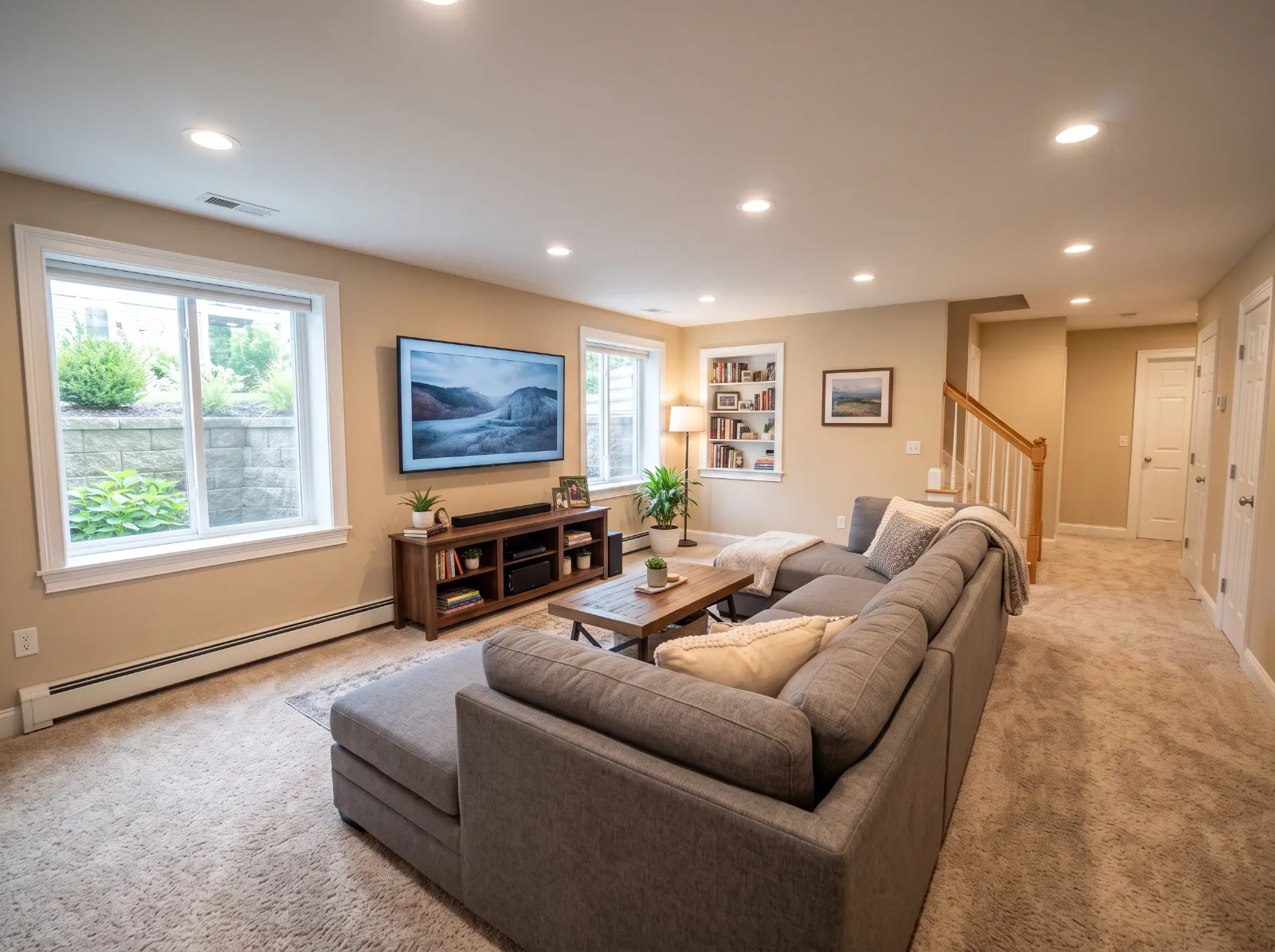
Carpet still does something no hard floor can: it’s soft, warm on a January morning and quiet. That is why it keeps its place in bedrooms, playrooms, finished basements and on stairs, where a padded surface is safer for kids and older family members.
Where it doesn’t belong: kitchens, bathrooms, laundry rooms, entries, and any basement that has taken water. Carpet also isn’t a good fit if someone in the house is bothered by dust, or if you have pets that aren’t reliably house-trained. For rooms like those, luxury vinyl plank or laminate is the better call.
Bedrooms, basements and stairs
Bedrooms. This is carpet’s easiest job. Low traffic, no water, and people like something soft underfoot first thing in the morning. A plush or a textured cut pile with a good pad feels best here.
Finished basements. A basement family room is where carpet does the most for comfort, because a slab is cold and hard. It’s also where it goes wrong most often. The rules: test the slab, pick a synthetic fiber that won’t feed mildew, use a pad with a moisture barrier, keep a dehumidifier running, and never lay carpet over a slab that has had standing water. Some homeowners add raised subfloor panels first to put an air gap between the slab and the carpet.
Stairs. Carpeted stairs cut noise and slips. There are two common ways to wrap them: waterfall, where the carpet drops straight from the nose of one tread to the next, and cap-and-band (often called upholstered or Hollywood), where it’s tucked tight under each nose for a tailored look. A runner that leaves painted or stained wood showing at the sides is a third option.
Choosing the pad
The pad matters more than most people think. It sets how the carpet feels, and a pad that is too soft lets the carpet flex and wear out early.
- Rebond foam. The most common pad. Look at density, not just thickness. Around 6 to 8 lb density at about 7/16 inch is a good general choice.
- Memory foam or frothed foam. Softer feel for bedrooms, at a higher price.
- Moisture-barrier pad. A film on top of the pad keeps spills from soaking through to the subfloor. Worth it in basements and for pet owners.
- Stairs. A thinner, firmer pad so the carpet wraps the nose tightly and doesn’t feel mushy underfoot.
Many carpet makers specify the pad their product needs. Following that is part of doing the job right.
Choosing the carpet
- Fiber. Nylon holds up best to traffic and springs back after furniture. Polyester (PET) is soft and resists stains but crushes faster in busy areas. Triexta falls in between and handles stains well. Wool is natural and long-lasting but costs more and isn’t a basement fiber.
- Style. Plush looks formal and shows footprints. Textured and frieze hide footprints and vacuum marks. Loop styles like Berber are durable but can snag on pet claws.
- Face weight and twist. Heavier face weight and a tighter twist generally mean the carpet stays looking new longer.
- Color. Mid-tone neutrals hide the most. Very light carpet in a basement next to the back door is a fight you won’t win.
What carpet costs in Central MA
National guides put carpet around $2 to $8 per square foot installed with pad, and Angi lists Boston-area carpet around $3.50 to $11 per square foot. For Central MA, a typical range is about $3.50 to $9 per square foot installed, pad included.
Typical ranges, not quotes:
| Typical scope | Size | Typical installed range |
|---|---|---|
| One bedroom, old carpet removed | ~144 sq ft | $550–$1,400 |
| Basement family room over a dry slab | ~400 sq ft | $1,500–$3,800 |
| Straight staircase | ~13 steps | $250–$950 |
| Old carpet and pad removal | per sq ft | add $0.70–$1.60 |
| Transitions to hard floors | each | add $25–$100 |
Stairs are priced per step. Cap-and-band, winders and open-sided stairs sit at the high end. Our written estimate itemises scope, materials and exclusions, including pad type by name.
What the job involves, step by step
- Measure and plan seams. We measure each room and lay out where seams will fall, keeping them out of doorways and main walking paths where we can.
- Moisture check on slabs. Basements get tested before carpet is ordered.
- Demo. Old carpet, pad and bad tack strip come out and staples are pulled.
- Subfloor prep. Squeaks screwed down, damaged spots repaired, and the floor swept clean.
- Tack strip and pad. New tack strip around the edges, pad laid and seamed, stapled on wood or glued on concrete.
- Install and stretch. Carpet is seamed and then power-stretched so it stays flat instead of rippling in a year.
- Stairs and transitions. Treads and risers fitted by hand, then metal or wood transitions where carpet meets hard floor.
- Doors and cleanup. Doors trimmed if they drag, and debris hauled away.
Most bedroom jobs are one day. A basement plus stairs is usually one to two days.
New England issues that affect carpet
Basements and radon. A lot of basements in Central Massachusetts have radon mitigation systems. We leave the suction point and sealed cracks alone and keep access open. Moisture is the bigger risk for carpet specifically, so the slab test isn’t optional.
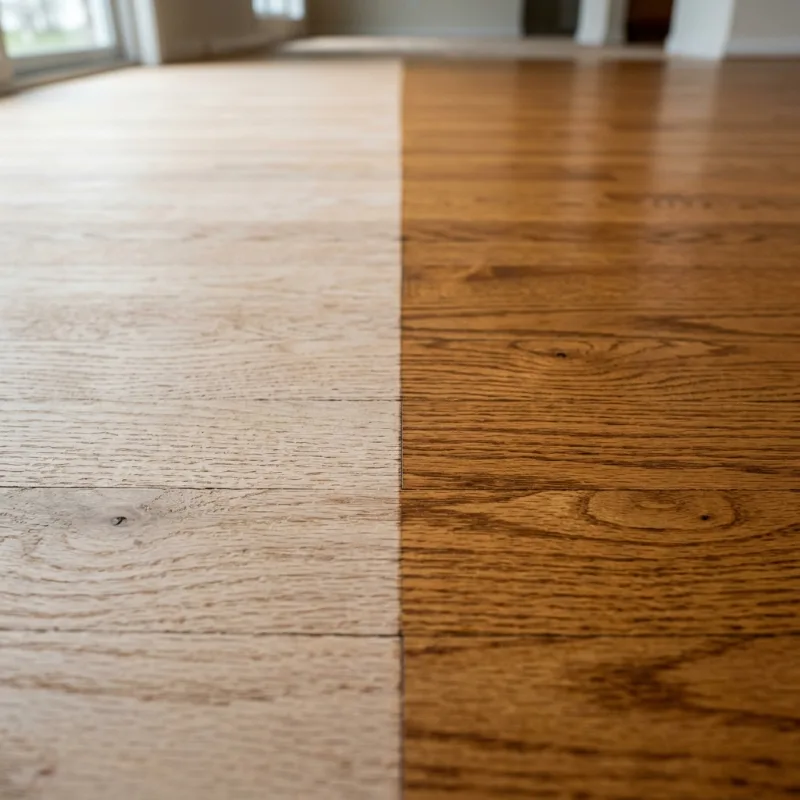
Hardwood under the carpet. In older colonials around Lancaster and Bolton, and in many Worcester three-deckers, there’s often oak flooring under wall-to-wall carpet. Before recarpeting, check a closet corner. If the wood is in good shape, refinishing it may be the better investment, with carpet runners or rugs where you want softness.
Asbestos. Old carpet in pre-1980s homes sometimes covers 9-inch by 9-inch vinyl tiles or black mastic. Carpet doesn’t require removing them. We test before we tear anything out, and Massachusetts rules for asbestos work, including MassDEP notification before removal, apply if it has to come up.
Narrow, steep stairs. Older homes in towns like Marlborough often have tight stairways with winders. Those take more cutting and are priced accordingly.
Lead paint. Pulling painted stair skirt boards or trim in a pre-1978 house falls under EPA RRP rules. Ask any contractor for their RRP paperwork in writing.
What to ask any flooring contractor
- What pad are you using, and does it meet the carpet maker’s requirements?
- Where will the seams be?
- Will you power-stretch the carpet?
- How are stairs priced, and which style is quoted?
- Will you test a basement slab for moisture first?
- Is removal and disposal of the old carpet included?
Next step
If you’re recarpeting bedrooms, a basement or a staircase, we’ll come out for a free in-home consultation: measure, bring carpet and pad samples, and follow up with a written estimate. See the flooring guide to compare other options.
Common questions
Is carpet a good idea in a basement?
It can be, in a basement that stays dry. We test the slab for moisture, use a synthetic carpet and a pad with a moisture barrier, and recommend running a dehumidifier. If the basement has ever taken on water, a hard floor like vinyl plank is the safer choice.
What pad should I get?
For most bedrooms and living rooms, a 7/16-inch rebond pad around 8 lb density is a solid choice. Stairs do better with a thinner, firmer pad. Basements need a pad with a moisture barrier. The carpet maker's requirements come first.
How is carpet on stairs priced?
By the step, because each tread and riser is cut and fastened by hand. A straight staircase is simplest; winders, landings, open sides and spindles add time and cost.
Can you carpet over old floor tile?
Usually, if the tile is flat and firmly stuck down. Tack strip and pad go right over it. If it's pre-1980s 9-inch tile, covering it is often simpler than removing it, and we test before disturbing it.
How long does carpet installation take?
A couple of bedrooms and a hall usually take one day, including removing the old carpet. A large basement or a full floor with stairs may take two.