Who a coated floor is right for, and where it fails
A coated concrete floor turns a dusty, stained, salt-eaten slab into a surface you can hose off. Every Massachusetts winter your car drags in slush loaded with salt and brine, and bare concrete soaks it up.
A coating is the right call for:
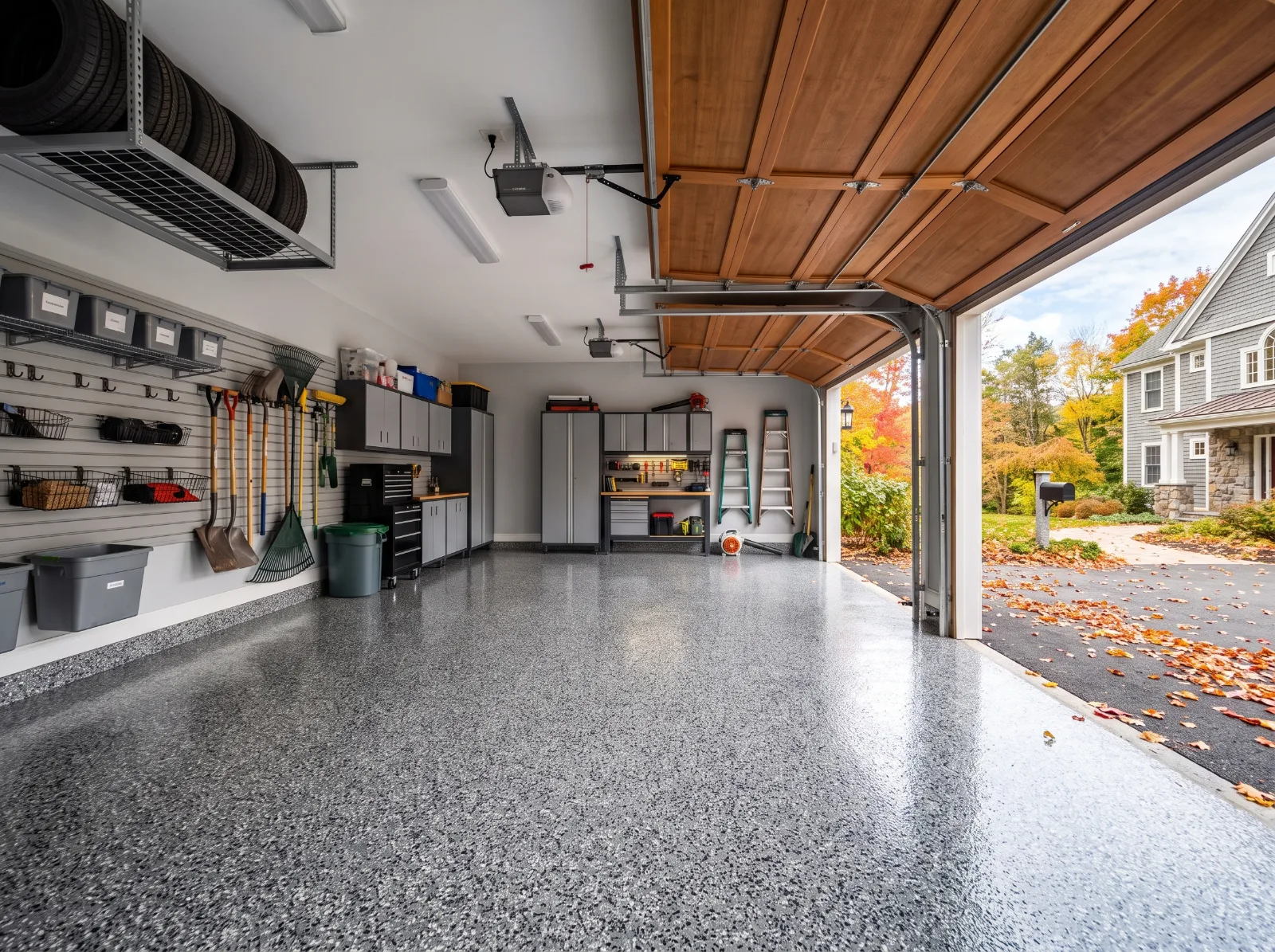
- Attached and detached garages, especially ones that double as a workshop, gym or storage space.
- Unfinished basements where you want a clean, bright floor for laundry, storage or a workbench area without adding anything that can rot or grow mold.
- Utility rooms and mudroom slabs that see water and grit.
Where it’s the wrong pick:
- A basement that floods or weeps water. A coating seals the top of the slab; it doesn’t stop water pushing up from below or through the walls. Fix the water first. If you’ve had water in the basement, our water damage restoration team can help sort that out.
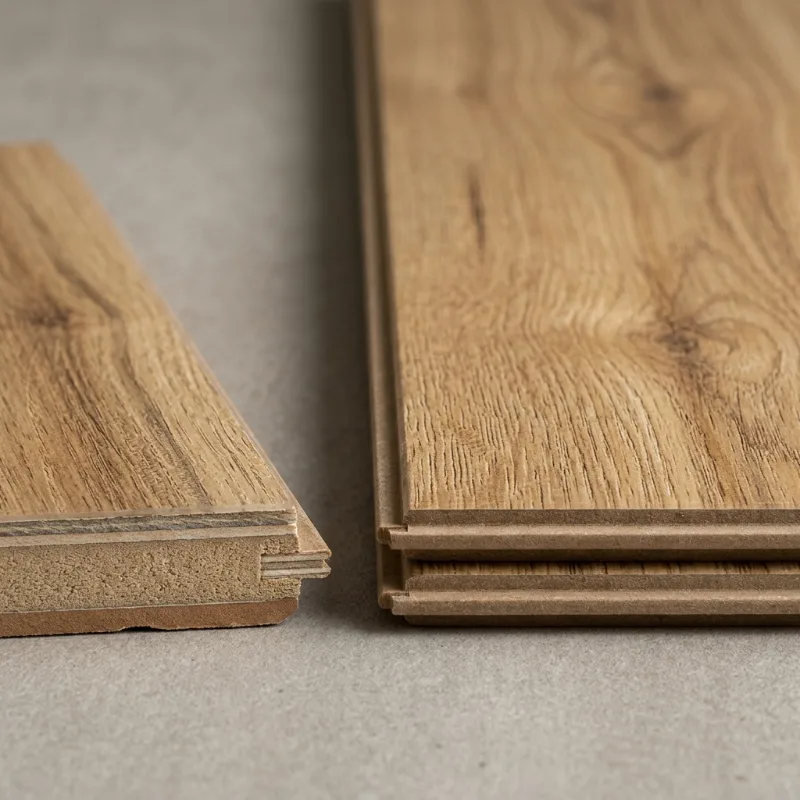
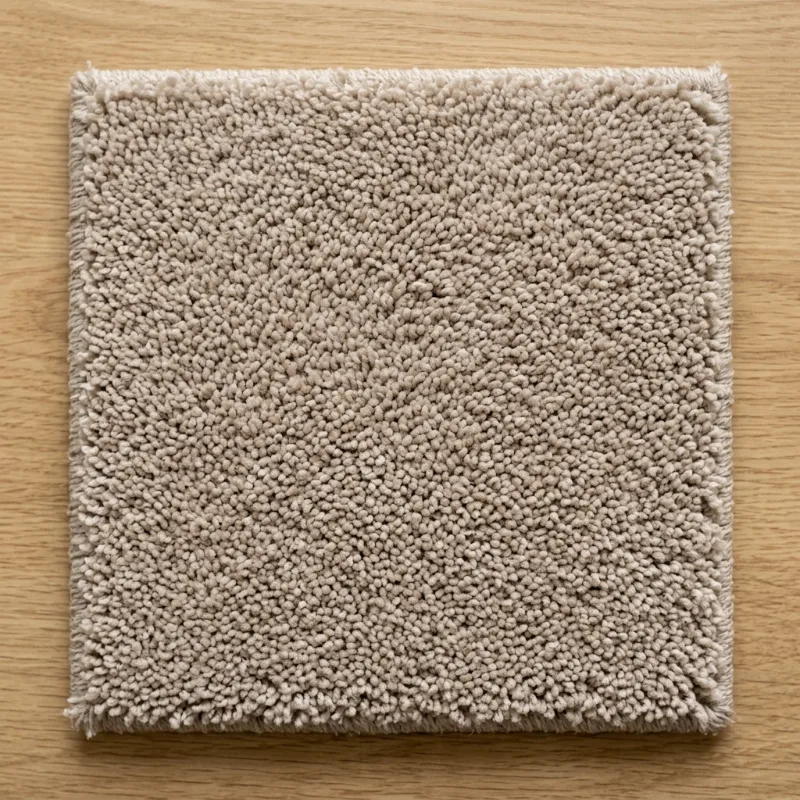
- A finished living space where you want warmth underfoot. For a basement family room, carpet or luxury vinyl plank is usually a better fit.
- A badly heaved or broken slab. A coating will just highlight big displaced sections. That slab needs repair first.
What it costs in Central MA
These are typical ranges, not quotes. Your written estimate itemises the scope, materials and exclusions so you can compare apples to apples.
| Typical scope | Typical installed range |
|---|---|
| Flake system with clear topcoat, per sq ft | $6–$12 |
| One-car garage (about 250 sq ft) | $1,800–$3,500 |
| Two-car garage (about 450–500 sq ft) | $3,000–$6,000 |
| Basement floor, solid color (about 600 sq ft) | $3,600–$7,200 |
| Crack and spall repair, per sq ft of affected area | $0.50–$2 |
| Moisture-mitigating primer, per sq ft | $2–$5 |
What moves a price: the condition of the concrete, old paint or sealers that have to be ground off, how much crack and spall repair is needed, the system thickness, full flake versus a light broadcast, and whether the slab needs a moisture primer.
Grind prep vs acid etch
Prep is where coatings live or die. There are two common ways to open up concrete so a coating can bite:
- Acid etching is what most DIY kits use. It’s cheap, but it’s inconsistent on a garage slab, doesn’t remove oil, old paint or cure-and-seal products, and leaves residue if it isn’t rinsed perfectly.
- Diamond grinding uses a floor grinder with dust extraction to take off the top layer of the slab, down to clean, open concrete. It removes old coatings and contamination and gives a consistent profile every time.
We grind. It’s the main difference between a floor that holds up and one that peels at the tire tracks after the first winter.
Epoxy vs polyaspartic, flake vs solid
Epoxy builds thickness well and bonds hard to properly prepared concrete. It’s a strong base coat. On its own as a topcoat it can yellow in sunlight and takes days to cure hard enough for cars.
Polyaspartic cures quickly, holds its color in UV, and resists scratches and chemicals well. It costs more, and its short working time means it has to be applied by someone who’s done it before.
Many solid systems pair them: epoxy base, polyaspartic top.
Flake vs solid color. A full flake broadcast hides dust, tire marks and small imperfections in the slab, and the texture adds grip when the floor is wet. Solid color looks clean and works well in a basement, but it shows everything and gets slick when wet unless an anti-slip additive goes in the topcoat. For a garage, most people pick flake.
What the job involves, step by step
A typical scope looks like this for a two-car garage:
- Clear and inspect. The garage gets emptied and we look at cracks, spalling, old coatings and oil stains.
- Moisture test. We test the slab before we commit to a system (see below).
- Grind. Diamond grind the whole floor with dust extraction, edges included.
- Repair. Fill cracks, spalls and pitting with a repair compound, then grind it flush. Control joints get handled as agreed.
- Base coat. Apply the primer or base coat. On a slab with high moisture readings, this is a moisture-mitigating primer.
- Broadcast. For a flake system, broadcast flake into the wet base coat, let it cure, then scrape and vacuum the excess.
- Topcoat. Apply the clear topcoat, with anti-slip additive where you want it.
- Cure and walkthrough. We walk the floor with you and give you the dates for foot traffic and parking in writing.
Timeline: most garages run about 1 to 3 days of work, then cure time before you park.
Moisture vapor testing
Concrete is porous, and slabs, especially basement floors and older garage slabs without a vapor barrier under them, push moisture vapor up from the ground. Trap that vapor under a coating and it builds pressure, which shows up as bubbles, blisters or peeling.
We test before we pick a system. Common methods include a plastic-sheet test as a quick screen, calcium chloride tests that measure the rate of vapor coming out of the slab, and relative humidity probes set into the concrete. If readings are high, the system gets a moisture-mitigating primer rated for those conditions. Basements with radon mitigation systems need the suction point and any slab penetrations kept sealed and accessible, and the coating works around them.
Cure temperatures in Massachusetts shoulder seasons
Coatings are chemistry, and chemistry is temperature-sensitive. Most epoxy products want the slab and air around 50°F or warmer during application and cure, and the slab needs to stay a few degrees above the dew point so condensation doesn’t form on it. Many polyaspartic products are rated for cooler temperatures, but every product has its own limits on the data sheet.
That matters in late fall and early spring. A garage in Holden or Westford can be 60°F at noon and near freezing overnight, and a cold slab on a humid spring morning can sweat. We check the slab temperature and dew point, schedule around the forecast, and may use temporary heat for an unheated garage. Summer and early fall are the easiest windows; mid-winter work in an unheated garage usually waits.
Road salt and freeze-thaw
Rock salt, calcium chloride and magnesium chloride brine are hard on bare concrete. They soak in, go through freeze-thaw cycles and cause surface flaking and spalling. It’s common in the 1960s ranches and split-levels around Leominster and Fitchburg, and in the detached garages on bigger lots in Sterling, Bolton and Harvard.
A coating that is properly adhered to ground concrete seals the surface so salt water sits on top where you can squeegee or hose it out. Floors still need rinsing a few times a winter; salt residue left sitting dulls any topcoat over time.
What to ask any flooring contractor
- Do you diamond grind or acid etch?
- Will you test the slab for moisture before choosing a system?
- What’s the base coat, what’s the topcoat, and how thick is the system?
- How are cracks, spalls and control joints handled?
- What slab temperature and dew point do you need to install, and what happens if the weather doesn’t cooperate?
- When can I walk on it, and when can I park?
- Which exact products are you using? Manufacturer warranties vary by product, so get the names in writing.
Get your floor looked at
Book a free in-home consultation. We’ll look at the slab, measure, show you flake and color samples, and talk through what your garage or basement actually needs. You’ll get a written estimate that itemises scope, materials and exclusions.
Common questions
How much does an epoxy garage floor cost in Central Massachusetts?
Typical installed ranges run about $6 to $12 per square foot for a ground, flake-broadcast system with a clear topcoat. A two-car garage usually lands somewhere around $3,000 to $6,000. Heavy crack repair, spalled concrete or a slab that needs moisture mitigation adds to that, and the written estimate itemises each of those separately.
Should I get epoxy or polyaspartic?
Many good systems use both: an epoxy base coat for adhesion and build, with a polyaspartic topcoat for UV stability and scratch resistance. Straight epoxy can yellow in sunlight and takes longer to cure. Polyaspartic cures fast and tolerates cooler temperatures, but it costs more and leaves less working time. The right mix depends on your slab, the season and how you use the space.
Why do DIY epoxy kits peel?
Usually the prep. Acid etching a garage slab rarely opens the surface enough, and it leaves oil and old sealers behind. Kit coatings are also thin. Hot tires soften thin epoxy and pull it up, which is called hot tire pickup. Diamond grinding and a thicker, commercial-grade system are what stop that.
Can you coat a basement floor that gets damp?
Sometimes. We test the slab for moisture vapor first. A slab with high readings needs a moisture-mitigating primer rated for it, and a basement that actually takes in water needs that fixed before any coating goes down. A coating is not a drainage system.
How soon can I park in the garage?
It depends on the product and the temperature. Polyaspartic topcoats usually allow foot traffic within hours to a day and vehicles in a couple of days. Epoxy systems often need closer to five to seven days before you park. In cool shoulder-season weather everything takes longer, and we'll give you the date in writing.