Who tile is right for, and where it fails
Tile is the floor you pick when water, mud and salt are part of daily life. Porcelain and ceramic don’t care about a dripping shower, a dog shaking off at the back door or slush melting off a pair of boots in February. They don’t dent, they don’t fade, and a well-set floor lasts for decades.
It’s the right call for:
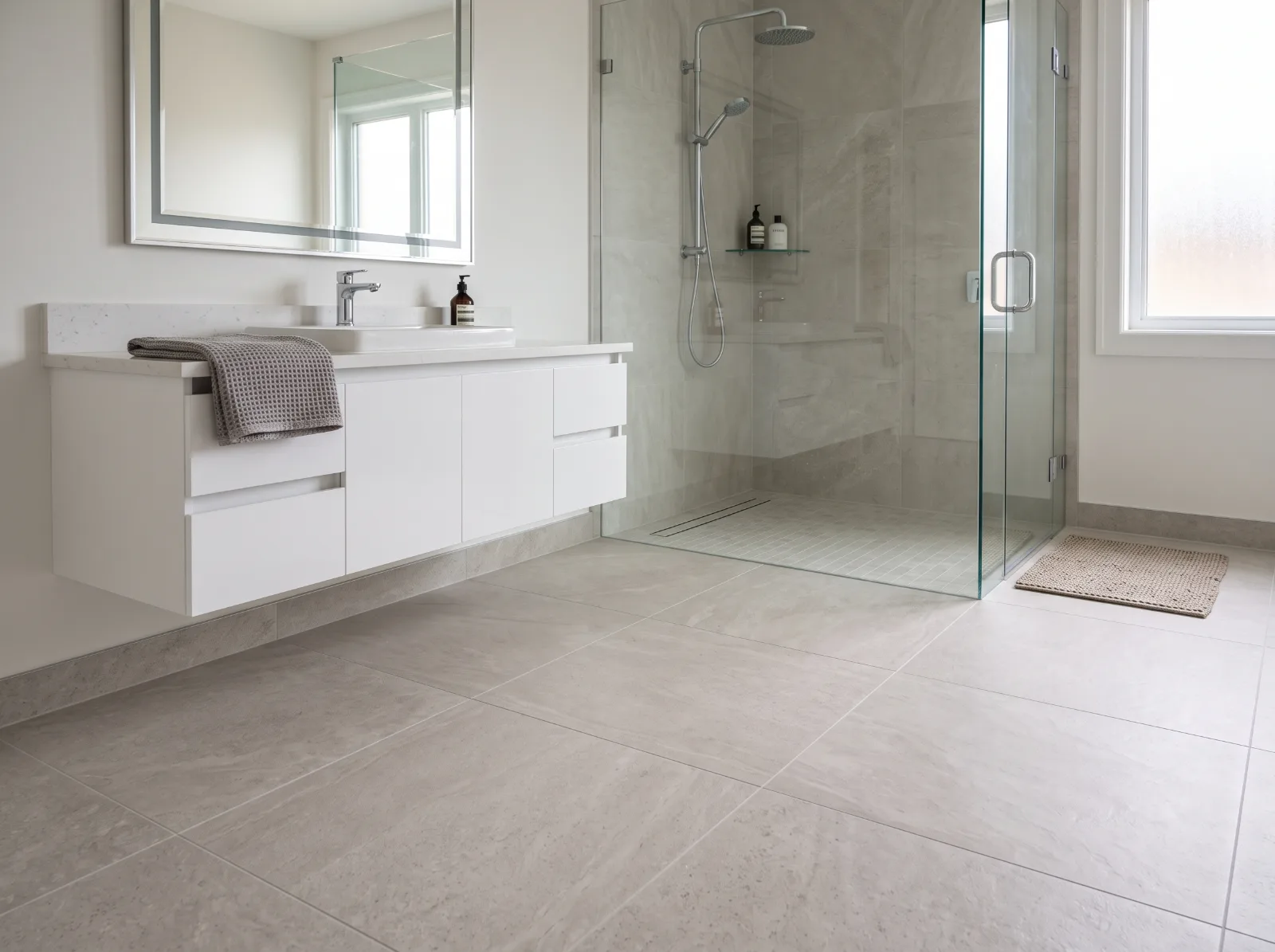
- Bathrooms, especially full baths and kids’ baths where water ends up on the floor.
- Mudrooms and entries, where road salt and sand get tracked in all winter.
- Kitchens, if you can live with a hard surface underfoot and want something that handles spills and dropped pans (well, the floor survives; the plate may not).
- Laundry rooms, where a washer leak is a matter of when, not if.
Where tile is the wrong pick:
- Over a bouncy floor. Tile and grout crack when the subfloor flexes. If your joists are undersized or the subfloor is thin, that has to be fixed first or the tile will fail.
- Where you stand for hours and want softness. Tile is hard on feet and knees. Some people love it in a kitchen; some hate it after a month.
- On a tight budget for a big open area. Per square foot, tile costs more than luxury vinyl plank and takes longer to install. For a large family room, LVP or hardwood is often the better use of money.
What tile costs in Central MA
These are typical ranges, not quotes. Every house is different, and your written estimate itemises the scope, the materials and what’s excluded, so you can see exactly what you’re paying for.
| Typical scope | Typical installed range |
|---|---|
| Porcelain or ceramic floor tile, per sq ft | $14–$30 |
| Small bathroom floor (40–60 sq ft), including demo and toilet pull/reset | $1,800–$4,000 |
| Kitchen floor (150–250 sq ft), porcelain | $3,500–$7,500 |
| Mudroom or entry (60–100 sq ft) | $1,500–$3,500 |
| Remove existing tile, per sq ft | $2–$7 |
| Subfloor repair or replacement, per sq ft | $2–$5 |
| Electric heated floor under tile, per sq ft | $8–$20 |
What pushes a job toward the high end: large-format tile (24 inches and up) that needs a flatter floor, patterns like herringbone, natural stone, lots of cuts around cabinets and door casings, and old floors that have to come out in layers.
What the job involves, step by step
A typical scope looks like this for a bathroom or kitchen floor:
- Test and protect. In a pre-1980s house we test old vinyl tile and black mastic for asbestos before anything gets pulled up. In pre-1978 homes, removing painted baseboard or trim can disturb lead paint, so ask any contractor for their EPA RRP lead-safe paperwork in writing. We protect the rest of the house with floor covering and dust barriers.
- Demo. Pull the toilet, vanity base or appliances as needed, then remove old flooring down to the subfloor.
- Check the structure. We check for deflection and flatness. Soft spots near a toilet usually mean an old leak and rotted plywood, and that section gets cut out and replaced.
- Build the base. Cement backer board or an uncoupling membrane goes down over a solid subfloor. On a concrete slab, cracks get treated and a membrane isolates them from the tile. If you’re adding a heated floor, the mat or cable goes in here, gets tested and connects to a thermostat on its own circuit.
- Layout and set. We dry-lay the room to center the pattern and avoid thin slivers at doorways. Tile is set in thinset, checked for flatness and lippage, and left to cure.
- Grout and seal. Grout goes in once the thinset is ready. Cement grouts get sealed; many modern grouts don’t need it.
- Transitions and trim. Thresholds to hallways and adjoining rooms get a proper transition strip or a marble saddle so nobody trips on the height change. Baseboard goes back on.
- Reset and walkthrough. Toilet, vanity and appliances go back, we clean up, and we walk the floor with you.
Timeline: plan on about 3 to 5 working days for a bathroom floor and roughly 4 to 7 days for a kitchen, with cure time built in. No acclimation period is needed for tile the way it is for wood.
New England issues we plan for
Old floors in old houses. Clinton’s mill-era homes and the older triple-deckers around Worcester often have plank subfloors, out-of-level floors and several layers of flooring stacked up over the decades. Tile over a sagging 100-year-old floor will crack. We level or rebuild the base first, and we’ll tell you up front if the structure needs more than a floor job.
Asbestos under the vinyl. Those 9-by-9 tiles in a 1950s–70s ranch in Shrewsbury or Leominster, and the black mastic under them, can contain asbestos. We test before we tear it out. If it comes back positive, Massachusetts has specific rules for removal, including MassDEP notification, and that work goes to a dedicated asbestos abatement contractor before our part starts.
Cold floors over crawlspaces and garages. A bathroom over an unheated crawlspace or a mudroom over the garage can be cold enough to notice through your socks. That’s where a heated floor earns its keep.
Salt and freeze-thaw at the door. Unglazed or low-absorption porcelain handles winter salt far better than soft ceramic or natural stone. In an unheated three-season porch or entry, use tile rated for freeze-thaw.
Basement slabs. Tile is one of the few finishes that tolerates a damp basement, but the slab still gets a moisture check first. If there’s a radon mitigation system, we keep the suction point and slab penetrations sealed and accessible.
How to choose tile
- Porcelain vs ceramic. Porcelain for entries, mudrooms and kitchens; ceramic is fine for a guest bath.
- Slip resistance. For bathrooms and entries, look at the tile’s wet slip rating (DCOF). Matte and textured finishes grip better than polished.
- Size. Large-format tile means fewer grout lines but needs a very flat floor. Small tiles and mosaics follow a sloped shower floor and add grip.
- Grout color. A mid-tone grey or a color close to the tile hides dirt best. Stark white grout in a mudroom is a cleaning project.
- Buy extra. Order 10 to 15 percent over the measured area and keep a box for future repairs. Tile lots vary in shade.
- Read the fine print. Manufacturer warranties vary by product, so check the terms on setting materials and membranes as well as the tile.
If you’re redoing the whole room, our bathroom remodeling and kitchen remodeling pages cover the bigger picture.
What to ask any flooring contractor
- What goes under the tile: backer board, membrane or neither, and why?
- Will you test for asbestos before removing old flooring?
- How do you check the floor for flatness and deflection before setting?
- What thinset and grout are you using, and does the grout need sealing?
- How are transitions to other rooms handled?
- Is removal and disposal of the old floor in the written estimate?
- For pre-1978 homes: can you provide EPA RRP lead-safe paperwork in writing?
Get a tile floor priced right
Book a free in-home consultation. We’ll measure, look at the subfloor, bring samples and talk through what the room actually needs. You’ll get a written estimate that itemises scope, materials and exclusions, so there’s nothing to guess about.
Common questions
How much does a tile floor cost in Central Massachusetts?
Typical installed ranges run about $14 to $30 per square foot for porcelain or ceramic, including setting materials and grout. Removing old tile, repairing the subfloor, adding an uncoupling membrane or a heated mat all add to that. Small bathrooms often cost more per square foot because setup and prep are the same no matter how small the room is.
Is porcelain better than ceramic for a floor?
For most floors in a New England house, yes. Porcelain is denser and absorbs less water, so it handles wet boots, road salt and freeze-thaw in an unheated entry better. Ceramic is fine for a low-traffic bathroom and usually costs a little less. Check the tile's floor rating before you fall for a wall tile.
Can you put tile over my old floor?
Sometimes, but usually we don't. Tile needs a stiff, flat base, and layering over old vinyl or tile raises the floor, can crack later and makes doors and toilets harder to fit. In pre-1980s homes old 9-by-9 tiles and black mastic may contain asbestos, so we test before we tear anything out.
How long does a tile floor take to install?
A typical bathroom floor takes about 3 to 5 working days from demo to grout and fixture reset, allowing for thinset and grout to set. A kitchen or open mudroom runs roughly 4 to 7 days depending on size, subfloor work and whether a heated floor goes in. The written estimate lays out the schedule.
Is a heated tile floor worth it in Massachusetts?
In a bathroom or mudroom over a cold crawlspace or garage, a lot of people think so. Electric mats or cables go under the tile and typically add about $8 to $20 per square foot installed, plus a dedicated circuit and thermostat. They need to be decided before the tile goes down, since adding one later means tearing the floor up.